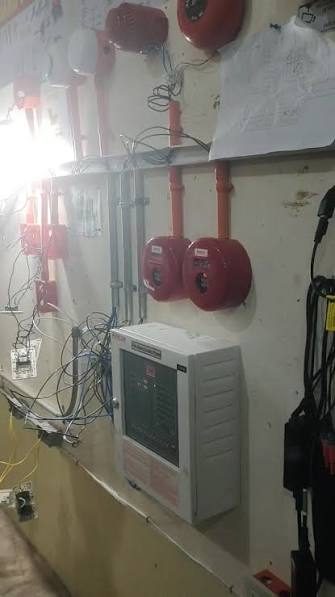
NFPA 72 doesn't mandate one panel architecture over the other outright — the right choice depends on facility size, zoning granularity and future flexibility — but for most mid-to-large industrial and commercial buildings in India, Nepal and Bhutan, the calculation increasingly favors addressable systems.
A conventional system wires each zone as a group of devices on a shared circuit — the panel knows a zone has activated, not which specific device triggered it. An addressable system gives each device (detector, pull station, module) its own identifier on a signaling line circuit, so the panel — and responding personnel — know the exact device and location immediately. That precision matters most in large or multi-floor buildings where 'zone 4 has an alarm' could mean anywhere across a large footprint.
For small, single-zone or low-complexity buildings — a compact warehouse, a small office floor — conventional systems remain simpler and less expensive to install and maintain, and NFPA 72 fully supports them at that scale. The crossover point is less about a hard size threshold and more about whether pinpoint location matters for response time and whether the facility is likely to be reconfigured or expanded, since addressable systems handle both device-level troubleshooting and future zone changes far more gracefully.
Ask three questions: how large and how compartmentalized is the facility (more zones favors addressable); does the occupancy involve regulated or high-value processes where response speed and exact fault location matter (pharma, data centers, warehousing with racked storage); and is the building likely to expand or be reconfigured within its service life (addressable systems scale by adding devices to existing loops rather than rewiring new zone circuits). Any two 'yes' answers generally justify the addressable system's higher upfront cost.
Volz designs, supplies, installs and commissions this scope under one contract, engineered to recognized codes and standards for facilities across Pan India, Nepal, Bhutan and Bangladesh.