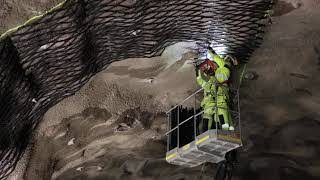
Tunnels, metro underpasses and deep basements frequently can't be waterproofed from the exterior after construction — the ground is already backfilled, or was never accessible in the first place for a bored or retrofit structure. Negative-side (interior) drainage systems exist specifically for this scenario, and specifying them correctly is different from specifying standard waterproofing membranes.
A negative-side system doesn't stop water from reaching the structure the way an exterior membrane does — it manages water that has already reached the interior face, channeling it through a cavity drainage membrane down to a perimeter channel and out through a sump pump system, rather than sealing it out entirely. This is a meaningfully different engineering approach from positive-side waterproofing, and specifying it as if it were simply 'waterproofing done from the inside' leads to underspecified drainage capacity and pump redundancy.
Because the system's job is to manage ongoing water ingress rather than eliminate it, pump capacity, redundancy (duty/standby pump configuration) and power backup are the parts of the design that actually determine whether the space stays dry — not the membrane alone. Undersized sump pits or single-pump configurations without standby power are a common point of failure precisely because they're treated as a minor detail rather than the core of the system's performance.
For bored tunnels, retrofit basements in existing buildings, and metro or underground infrastructure where exterior access simply isn't available, negative-side drainage is the correct, standard engineering solution — not a fallback used only when positive-side waterproofing wasn't done properly. Framing it that way to stakeholders early avoids the misconception that a dry basement using this method is somehow under-protected compared to a positive-side system, when in fact it's the appropriate method for the site conditions.
Volz designs, supplies, installs and commissions this scope under one contract, engineered to recognized codes and standards for facilities across Pan India, Nepal, Bhutan and Bangladesh.